Retatrutide in Research:
What the Evidence Shows
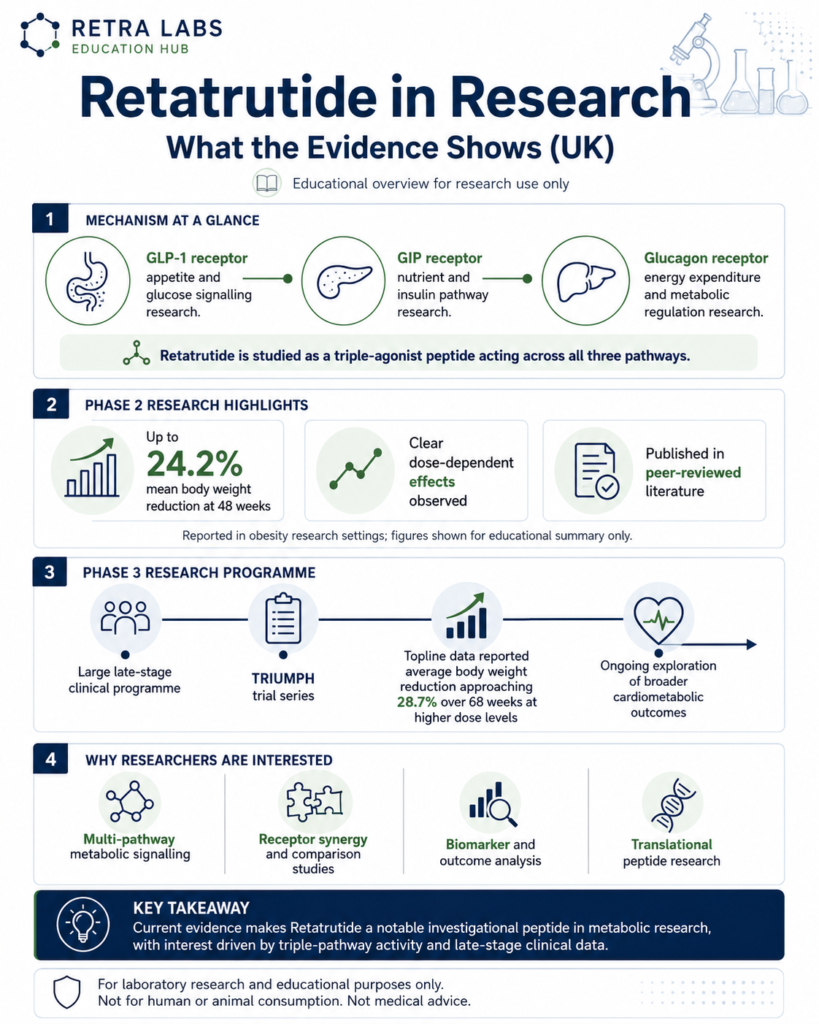
Retatrutide is an investigational triple receptor peptide studied extensively in metabolic research. This guide summarises key clinical trial findings and mechanistic evidence from published studies and advanced clinical programmes. It is intended for laboratory research and educational purposes only and is not advice for clinical use or human therapy.
1. Mechanistic Basis: Triple Agonism Explained
Retatrutide’s scientific profile centres on its ability to engage three hormone receptors involved in metabolic regulation:
- GLP‑1 receptor – linked with appetite signalling and glucose metabolism
- GIP receptor – influences insulin secretion and adipose tissue response
- Glucagon receptor – associated with energy expenditure and hepatic glucose output
Instead of targeting a single receptor, Retatrutide achieves simultaneous activation of all three pathways an approach known as triple agonism. This mechanism provides a broader metabolic signalling footprint in research settings compared with single or dual‑agonist peptides such as semaglutide or tirzepatide.
Structurally, Retatrutide is a synthetic peptide engineered to resist enzymatic degradation while maintaining strong receptor engagement, and its extended half‑life supports once‑weekly dosing in clinical research protocols.
2. Phase 2 Clinical Evidence
Phase 2 clinical trials provide foundational data on Retatrutide’s effects over intermediate treatment durations in larger participant groups:
- A notable Phase 2 obesity study reported mean reductions in body weight of up to ~24.2% at 48 weeks in adults without diabetes.
- Earlier data at 24 weeks also showed significant weight change — about 17.5% reduction at certain doses — demonstrating a strong dose‑dependent effect.
Although individual trials vary in design, the consistent evidence across Phase 2 studies is that triple‑agonist signalling produces larger metabolic changes than peptides targeting only one or two receptor pathways.
These Phase 2 results have been published in peer‑reviewed journals including The New England Journal of Medicine, making them useful references for research contexts.
3. Phase 3 Clinical Programme
Retatrutide’s Phase 3 research programme including the TRIUMPH series of trials is among the most extensive late‑stage clinical investigations for a triple‑agonist peptide:
- Preliminary topline data from TRIUMPH‑4 reported average body weight reductions approaching ~28.7 % over 68 weeks at higher dose levels.
- Larger Phase 3 programmes continue to explore metabolic outcomes across multiple populations and indications, with results updated progressively.
It is important to note that Phase 3 data includes detailed assessments beyond weight change, such as exploratory cardiometabolic markers.
4. Interpreting the Evidence in Research Settings
In laboratory research, Retatrutide’s evidence base serves several purposes:
- Mechanistic insights — Triple agonism highlights how distinct metabolic pathways interact and can be probed experimentally.
- Comparative peptide biology — Comparing Retatrutide’s profile with GLP‑1 or dual‑agonists helps examine receptor synergy.
- Biomarker analysis — Outcomes such as changes in lipid profiles, glucose regulation, or metabolic hormones are useful signals for researchers.
Researchers should always consult original publications and trial registries when contextualising research findings. See the PubMed Research Database for peer‑reviewed sources on Retatrutide.
5. Internal & External References
Internal Links:
- What Is Retatrutide? Research Overview (UK)
- Storage & Handling Basics
- Preparation Essentials Explained
External Links:
- PubMed Research Database — https://pubmed.ncbi.nlm.nih.gov/
6. Research Use Considerations
Retatrutide is investigational and not approved by regulatory authorities such as the MHRA (UK), EMA or FDA. Its study data are continuously updated as research progresses. Always consider regulatory guidelines and ethical standards when using investigational peptides in research.