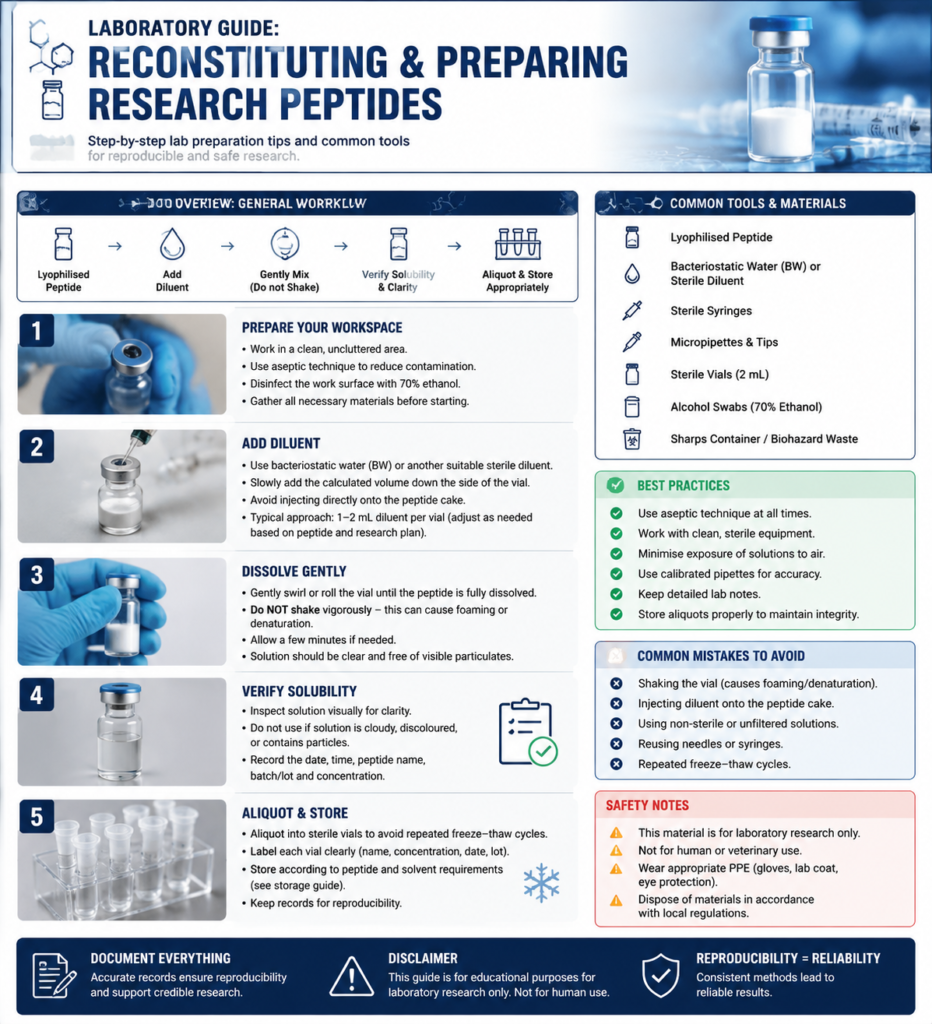
Laboratory Guide: Reconstituting & Preparing Research Peptides
Introduction
Reconstituting research peptides correctly is essential to maintain stability, activity, and experimental reproducibility. This guide provides step-by-step instructions and highlights essential laboratory tools for safely preparing peptides for research applications.
Required Tools & Equipment
Before beginning, ensure you have the following items:
- Research-grade lyophilised peptide vials or prefilled pens.
- Sterile pipettes, micropipettes, and tips.
- Aseptic workspace, gloves, and lab coat.
- Sterile solvents (e.g., water for injection or appropriate buffers).
Step‑by‑Step Reconstitution
- Inspect the Peptide: Verify vial integrity, batch number, and expiry date.
- Prepare Solvent: Use sterile, pre-chilled solvent if recommended.
- Add Solvent Slowly: Avoid foaming; gently add to the vial.
- Mix Gently: Invert the vial slowly or use a pipette to dissolve completely. Avoid vigorous vortexing.
- Label the Solution: Include concentration, date of preparation, and stability window.
- Aliquot if Needed: Divide into smaller portions to minimize freeze thaw cycles.
Pen & Vial Preparation
- For prefilled pens, ensure the dose counter is zeroed before first use.
- Attach needles aseptically and remove protective caps just before injection.
- Keep unused pen cartridges stored at recommended temperatures until needed.
Aseptic Techniques & Safety
- Always wear gloves, lab coat, and eye protection.
- Work in a clean environment; use laminar flow hoods if available.
- Dispose of used needles and pipettes according to lab safety regulations.
Maintaining Reproducibility
- Keep consistent records of solvent, vial, and pen usage.
- Follow manufacturer or supplier COAs for purity and stability information.
- Use standardised lab protocols for all peptide handling procedures.
Internal & External References
Internal Links:
External Links:
Tips for Successful Peptide Reconstitution
- Always work quickly but carefully to reduce contamination risk.
- Avoid repeated freeze thaw cycles to maintain peptide integrity.
- Store reconstituted peptides according to supplier recommendations and use promptly.