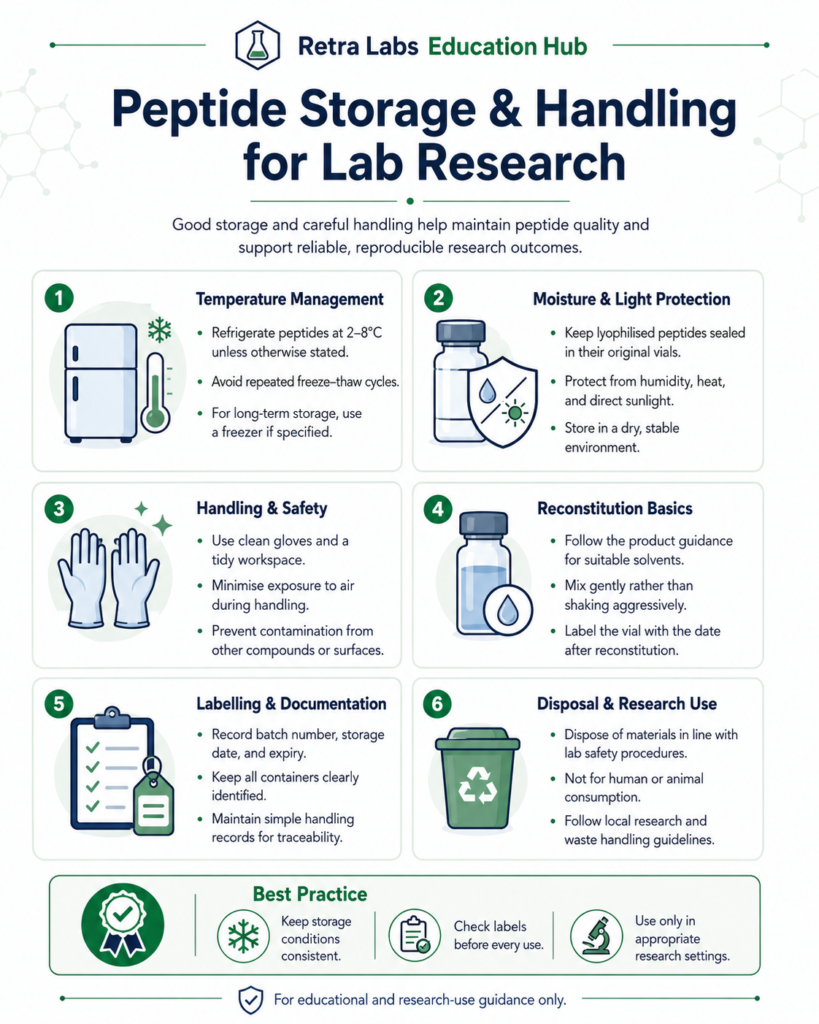
Peptide Storage & Handling for Lab Research
Introduction
Proper peptide storage and handling are critical to ensure experimental reproducibility, product integrity, and safety in laboratory settings. This guide provides best practices for managing lyophilised peptides and other research compounds used in scientific studies.
Lyophilised Peptide Storage
Lyophilised (freeze-dried) peptides are highly sensitive to temperature, humidity, and light. To maintain stability:
- Store at recommended temperatures, typically -20°C or lower.
- Keep vials tightly sealed to prevent moisture ingress.
- Protect from direct sunlight and rapid temperature changes.
Reconstitution Best Practices
Peptides should be reconstituted immediately prior to use following manufacturer instructions:
- Use sterile, research-grade solvents (e.g., water for injection or buffer solutions).
- Mix gently to avoid foaming or denaturation; do not vortex aggressively.
- Label reconstituted solutions with date, concentration, and stability window.
Handling & Safety
Safe handling minimizes contamination risk and ensures experiment reproducibility:
- Always use gloves, lab coats, and eye protection.
- Avoid repeated freeze-thaw cycles, which degrade peptide integrity.
- Dispose of needles, pipettes, and any biohazardous materials according to lab regulations.
Maintaining Reproducibility
Consistency in storage and handling improves research reliability:
- Track batch numbers, storage conditions, and reconstitution methods.
- Use standardized protocols for each experiment.
- Cross-reference COAs (Certificates of Analysis) for purity and activity.
Internal & External References
Internal Links:
External Links:
Tips for Safe Peptide Storage
- Monitor freezer temperatures with calibrated thermometers.
- Use desiccants and humidity indicators inside storage boxes.
- Keep detailed logs of opening dates and aliquot usage to prevent degradation.