Retatrutide vs Other Metabolic Peptides
Introduction
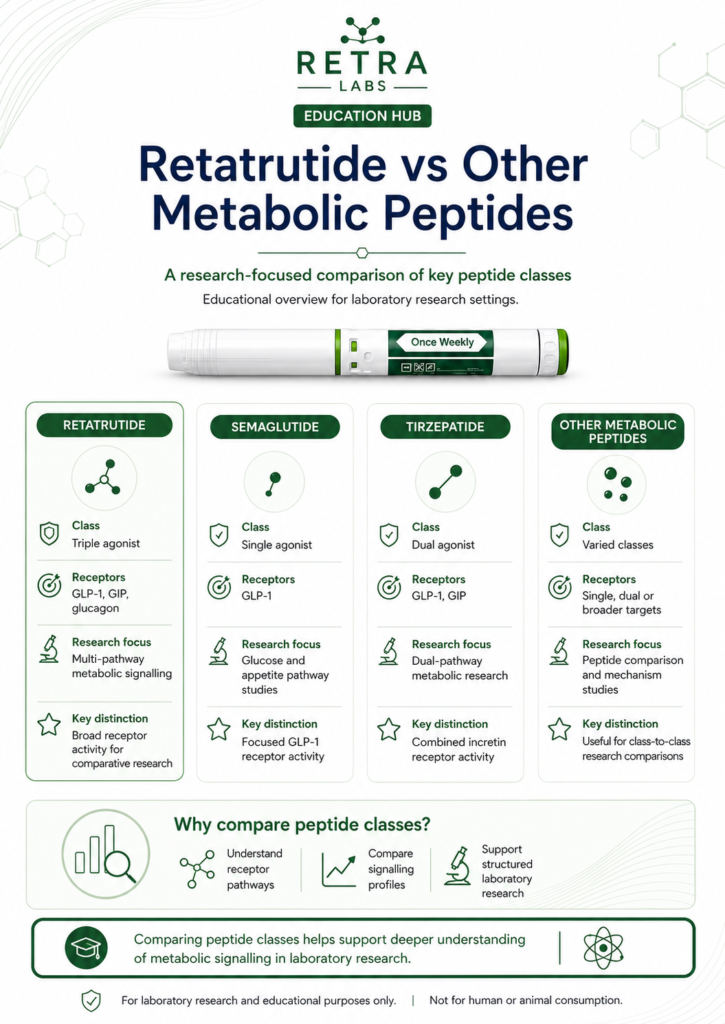
Retatrutide is a triple-agonist peptide that targets GLP-1, GIP, and glucagon receptors. This guide compares Retatrutide with other metabolic peptides such as Semaglutide, Tirzepatide, and dual-agonist compounds, focusing on research use applications, mechanistic differences, and experimental outcomes without implying human or animal consumption.
Mechanism of Action
- Retatrutide: Activates GLP-1, GIP, and glucagon receptors to study multi-pathway metabolic effects.
- Semaglutide: GLP-1 receptor agonist, widely researched for weight and glucose studies.
- Tirzepatide: Dual GLP-1/GIP receptor agonist, useful in research exploring combination effects.
- Other dual/metabolic peptides: Vary in receptor specificity, providing different experimental insights.
Experimental Comparison
- Examine receptor binding affinities and downstream signaling pathways.
- Compare dose response relationships in lab based models.
- Evaluate peptide stability under lab storage and reconstitution conditions.
Research Applications
- Investigate weight management and metabolic signaling pathways in vitro and ex vivo.
- Model multi-receptor interactions to understand combined peptide effects.
- Explore potential for combination studies in mechanistic research without suggesting therapeutic use.
Safety & Handling
- Follow strict lab protocols for lyophilised peptide reconstitution.
- Store peptides under recommended temperatures and conditions.
- Use aseptic techniques when handling to maintain experimental integrity.
Internal & External Links
Internal:
- Peptide Storage & Handling for Lab Research
- Laboratory Guide: Reconstituting & Preparing Research Peptides
External: