Retatrutide vs Semaglutide: Research Comparison UK
Compare Retatrutide vs Semaglutide in research, including receptor targets, mechanisms, evidence and key study differences.
Retatrutide vs Semaglutide: Research Comparison
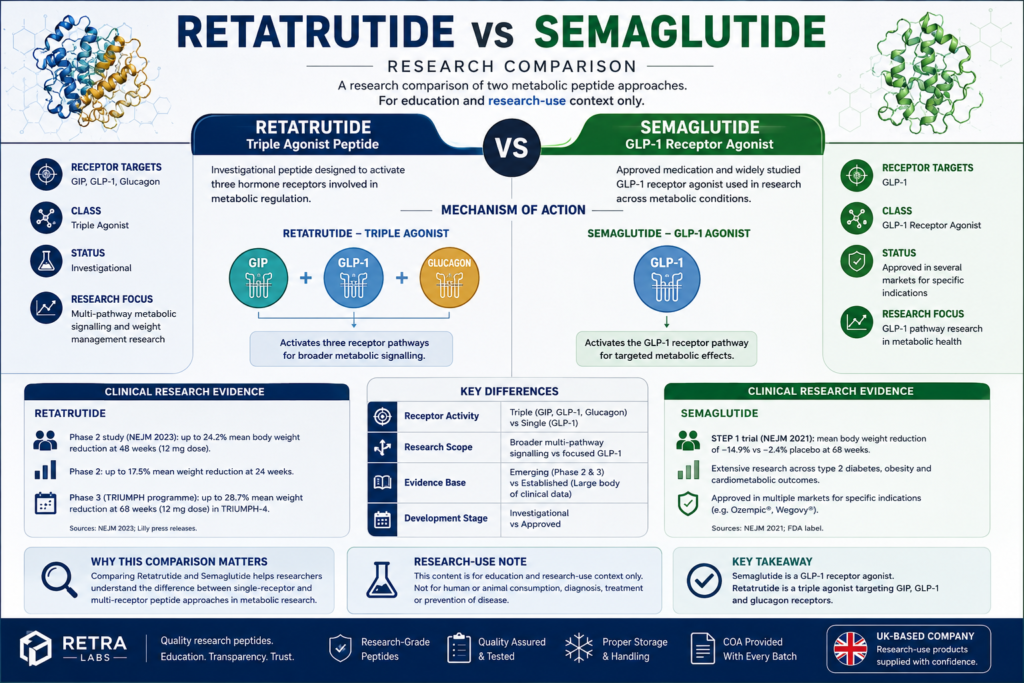
Retatrutide and Semaglutide are both widely discussed in metabolic peptide research, but they are not the same compound. The key difference is receptor activity. Semaglutide is a GLP-1 receptor agonist, while Retatrutide is a triple agonist designed to activate GIP, GLP-1 and glucagon receptors.
This guide compares Retatrutide vs Semaglutide from a research perspective. It explains receptor targets, mechanism, published evidence and key differences for education only. It does not provide medical advice, dosing guidance or personal use recommendations.
Quick Comparison: Retatrutide vs Semaglutide
| Feature | Retatrutide | Semaglutide |
|---|---|---|
| Research class | Triple agonist peptide | GLP-1 receptor agonist |
| Main receptor targets | GIP, GLP-1, glucagon | GLP-1 |
| Research focus | Multi-pathway metabolic signalling | GLP-1 pathway research |
| Development status | Investigational compound | Approved medicine in several markets for defined indications |
| Key study area | Obesity, metabolic research, related conditions | Type 2 diabetes, obesity, metabolic outcomes |
| Common comparison term | Triple agonist | Single GLP-1 agonist |
What Is Retatrutide?
Retatrutide is an investigational peptide being studied for its activity across three metabolic receptor systems: GIP, GLP-1 and glucagon. Lilly describes Retatrutide as a once-weekly triple hormone receptor agonist that activates receptors for glucose-dependent insulinotropic polypeptide, glucagon like peptide-1 and glucagon.
From a research point of view, Retatrutide is important because it allows scientists to examine wider metabolic signalling than single receptor compounds. Therefore, Retatrutide is often discussed in relation to triple agonist research, metabolic pathway studies and peptide receptor comparison.
What Is Semaglutide?
Semaglutide is a GLP-1 analogue and GLP-1 receptor agonist. The FDA label states that Semaglutide selectively binds to and activates the GLP-1 receptor, which is the target for native GLP-1.
In research literature, Semaglutide is often used as a reference point for GLP-1 receptor agonist studies. It has a strong evidence base across diabetes, obesity and cardiometabolic research, and it is widely discussed because of its established clinical development history.
Main Mechanism Difference
The simplest way to compare the two is this:
Semaglutide = GLP-1 receptor agonistRetatrutide = GIP + GLP-1 + glucagon receptor agonistThis means Semaglutide is mainly used to study GLP-1 receptor pathway activity. Retatrutide, however, adds GIP and glucagon receptor activity. As a result, Retatrutide may be studied for broader multi-pathway signalling.
Why GLP-1 Matters in Both Compounds
Both Retatrutide and Semaglutide involve GLP-1 receptor activity. GLP-1 receptor research is linked to glucose regulation, appetite signalling, gastric emptying, insulin secretion and incretin biology.
However, Semaglutide is focused on GLP-1 alone, while Retatrutide combines GLP-1 with GIP and glucagon activity. This makes the Retatrutide vs Semaglutide comparison useful when studying how single receptor and multi-receptor peptide approaches differ.
Why GIP and Glucagon Change the Research Question
The added receptor targets in Retatrutide change the research model.
GIP receptor research is linked to nutrient response, insulin secretion and adipose tissue signalling. Glucagon receptor research is linked to hepatic glucose output, energy expenditure pathways and wider metabolic regulation.
Because Retatrutide includes these extra pathways, researchers may compare it with Semaglutide to understand how broader receptor activity changes metabolic signalling patterns.
Clinical Research Evidence
Retatrutide Evidence
Retatrutide has been studied in Phase 2 and Phase 3 clinical programmes. A Phase 2 trial published in The New England Journal of Medicine reported substantial body weight reductions over 48 weeks in adults with obesity. The PubMed summary states that Retatrutide treatment for 48 weeks resulted in substantial reductions in body weight.
Lilly’s Phase 2 announcement reported that Retatrutide achieved up to 17.5% mean weight reduction at 24 weeks and up to 24.2% at 48 weeks in adults with obesity and overweight.
Lilly has also reported later Phase 3 data for Retatrutide, including TRIUMPH results. Because these findings continue to develop, researchers should always review original publications, company trial updates and clinical trial records before drawing conclusions.
Semaglutide Evidence
Semaglutide has a larger established evidence base. In the STEP 1 trial published in The New England Journal of Medicine, once-weekly Semaglutide was studied in adults with overweight or obesity. The mean body weight change from baseline to week 68 was −14.9% in the Semaglutide group compared with −2.4% in the placebo group.
This makes Semaglutide an important comparator for metabolic peptide research, especially when reviewing how GLP-1 receptor agonism compares with dual or triple receptor approaches.
Research Status and Regulatory Context
For UK readers, it is important to separate research discussion from clinical use. Semaglutide is an approved medicine in several markets for defined indications. Retatrutide remains an investigational compound while later stage clinical research continues.
This page is written for education and research-use context only. It is not suggesting either compound for personal use.
Retatrutide vs Semaglutide: Key Differences Explained
1. Receptor Targets
Semaglutide targets GLP-1 receptors. Retatrutide targets GIP, GLP-1 and glucagon receptors. This is the core scientific difference.
2. Research Scope
Semaglutide is mainly associated with GLP-1 receptor pathway research. Retatrutide is studied for broader triple receptor signalling.
3. Evidence Base
Semaglutide has a more established clinical evidence base. Retatrutide has strong emerging evidence, but it remains investigational.
4. Comparison Value
Comparing Retatrutide vs Semaglutide helps researchers understand the difference between single receptor and multi-receptor peptide approaches.
Why Researchers Compare Retatrutide and Semaglutide
Researchers compare these compounds because Semaglutide is a well known GLP-1 receptor agonist, while Retatrutide is designed to go beyond GLP-1 alone.
A research comparison may focus on:
Receptor selectivity
GLP-1 signalling
GIP receptor activity
Glucagon receptor activity
Trial design
Body weight outcomes
Glycaemic markers
Metabolic biomarkers
Tolerability signals
Development stage
This makes the Retatrutide vs Semaglutide comparison useful for literature review, peptide class education and metabolic pathway research.
UK Search Interest and Education Value
UK search interest often includes terms such as:
Retatrutide vs Semaglutide
Retatrutide UK research
Semaglutide research
GLP-1 receptor agonist
triple agonist peptide
Retatrutide mechanism
Semaglutide mechanism
These searches show that readers often want a simple explanation of how the compounds differ. Therefore, a clear comparison page can help answer search intent while keeping the content research use focused.
Important Research-Use Note
Retra Labs provides educational content for research use product settings only. This page is not medical advice and should not be used to guide personal decisions.
Where a product is marked for research use, it is supplied for that stated purpose only. It is not supplied for human or animal consumption, diagnosis, treatment or prevention of disease.
Internal Links to Add
Add these links inside the page where relevant:
What Is Retatrutide? A Research-Focused Overview
Retatrutide in Research: What the Evidence Shows
Retatrutide vs Tirzepatide: Research Comparison
Peptide Storage & Handling for Lab Research
Laboratory Guide: Reconstituting & Preparing Research Peptides
Retatrutide Product Page
Education Hub
Quality Standards
FAQ Section
What is the main difference between Retatrutide and Semaglutide?
The main difference is receptor activity. Semaglutide activates the GLP-1 receptor, while Retatrutide activates GIP, GLP-1 and glucagon receptors.
Is Retatrutide the same as Semaglutide?
No. They are different compounds with different receptor profiles. Semaglutide is a GLP-1 receptor agonist, while Retatrutide is a triple agonist.
Why is Retatrutide called a triple agonist?
Retatrutide is called a triple agonist because it targets three receptor pathways: GIP, GLP-1 and glucagon.
Why is Semaglutide called a GLP-1 agonist?
Semaglutide is called a GLP-1 agonist because it selectively binds to and activates the GLP-1 receptor.
Is this page medical advice?
No. This page is for education and research use context only. It does not provide medical advice, dosing guidance or personal use recommendations.
Where can I read the research?
You can review peer reviewed sources such as the NEJM Retatrutide study, the NEJM STEP 1 Semaglutide study, PubMed abstracts and official regulatory documents.